Bastien Dupessey
Let’s talk about ERP for small and medium-sized businesses (SMEs). In 2026, the business landscape for small and medium-sized businesses (SMEs) is more competitive than ever. Agility, efficiency, and data-driven decision-making are crucial to success. One solution that is redefining how SMBs operate is ERP (Enterprise Resource Planning). The global ERP market is estimated to reach $50 billion by 2026, with significant growth in the SMB segment, highlighting its increasing adoption and value. This comprehensive system helps companies manage their key business processes—from finance and human resources to sales and inventory management—all from a single platform.
What is an ERP system?
An ERP system is a suite of software applications that a company uses to manage and automate its core business functions. It integrates all aspects of a business—such as accounting, supply chain management, operations, sales, reporting, and manufacturing—into a single system. By consolidating data and processes, an ERP system eliminates duplication of effort and provides a unified view of business operations.
Key Benefits of an ERP System for Small and Medium-Sized Businesses
Implementing an ERP system offers numerous advantages for small and medium-sized businesses, enabling them to compete effectively with larger companies.
- Improved operational efficiency: Automates manual and repetitive tasks, freeing up time for employees to focus on higher-value activities.
- Improved visibility and control: Provides a real-time view of all aspects of the business, making it easier to identify bottlenecks and areas for improvement.
- Informed decision-making: Centralizes data, enabling the generation of accurate reports and in-depth analyses to support more sound strategic decisions.
- Cost reduction: Optimizes inventory management, reduces waste, and improves resource planning, resulting in significant savings.
- Greater collaboration: It promotes communication and collaboration among different departments by providing a single source of truth.
- Scalability: Modern ERP systems are scalable, which means they can grow along with your business.
Why Do Small and Medium-Sized Businesses Need an ERP?
SMEs face unique challenges, such as limited resources, intense competition, and the need to adapt quickly to market changes. In 2026, technology is essential for overcoming these obstacles. An ERP system is not just a tool for large corporations; it has become accessible and essential for SMEs seeking to optimize their operations and ensure their growth. The agility provided by an ERP system enables SMEs to respond more quickly to customer demands and market dynamics.
The growing digitization of business is driving the need for integrated systems. SMEs that do not adopt digital solutions, including an ERP, risk falling behind. The ability to manage remote operations, integrate online sales channels, and deliver personalized customer experiences depends largely on a robust technological infrastructure, such as that provided by an ERP system. According to a 2023 Statista report, 65% of SMEs were already using some form of integrated management software, and this figure continues to rise.
Types of ERP Systems for Small and Medium-Sized Businesses
Not all ERP systems are the same. Small and medium-sized businesses can choose from different implementation models and types of software to suit their specific needs and budget.
Cloud-Based ERP vs. On-Premise ERP
This is one of the most important factors to consider when choosing an ERP system.
Cloud ERP:
- The software and data are hosted on the provider’s servers and are accessed via the Internet.
- Advantages: Lower upfront cost, faster implementation, automatic updates, accessibility from anywhere, and flexible scalability.
- Disadvantages: Reliance on an Internet connection; potential concerns about data security (although modern cloud providers offer high levels of security).
On-Premise ERP:
- The software is installed and runs on the company’s own servers.
- Advantages: Greater control over data and security, more extensive customization.
- Disadvantages: Higher initial cost (hardware, licenses, IT staff), longer implementation time, full responsibility for maintenance and updates.
For most small and medium-sized businesses in 2026, cloud-based ERP offers a more practical, cost-effective, and scalable solution.
Modular ERP Systems vs. Comprehensive ERP Systems
- Modular ERP systems: They allow companies to purchase and implement only the modules they need initially (for example, finance and sales), and then add other modules (such as inventory or production) as they grow.
- Comprehensive ERP systems: They offer a complete set of features right from the start. While they may be more expensive, they provide full integration and a holistic view of the business from day one.
.
Key Features of an ERP System for SMEs
An ERP system for small and medium-sized businesses must offer a robust set of features that address both day-to-day operations and strategic objectives.
Financial and Accounting Management
This is often the core of an ERP system. It includes:
- General Accounting (General Ledger)
- Accounts Payable and Accounts Receivable
- Fixed Asset Management
- Bank Reconciliation
- Budgeting and Forecasting
- Generation of financial reports (balance sheets, income statements)
Customer Relationship Management (CRM)
Integrating the CRM with the ERP provides a comprehensive view of the customer:
- Contact and Prospect Management
- Tracking Sales Opportunities
- Marketing Automation
- Customer Service and Support
- Purchase and Interaction History
Supply Chain Management (SCM)
Optimize the flow of goods and services:
- Inventory Management (Stock Levels, Locations)
- Demand Planning
- Purchasing and Supplier Management
- Logistics and Shipment Tracking
Human Resource Management (HRM)
Manages the company’s human capital:
- Payroll Management
- Time Tracking and Attendance
- Benefits Administration
- Hiring and Onboarding
- Performance Management
Project Management
For companies that manage complex projects:
- Project Planning and Scheduling
- Cost and Budget Tracking
- Resource Allocation
- Task and Deadline Management
Reports and analysis
The ability to generate accurate reports and in-depth analyses is essential:
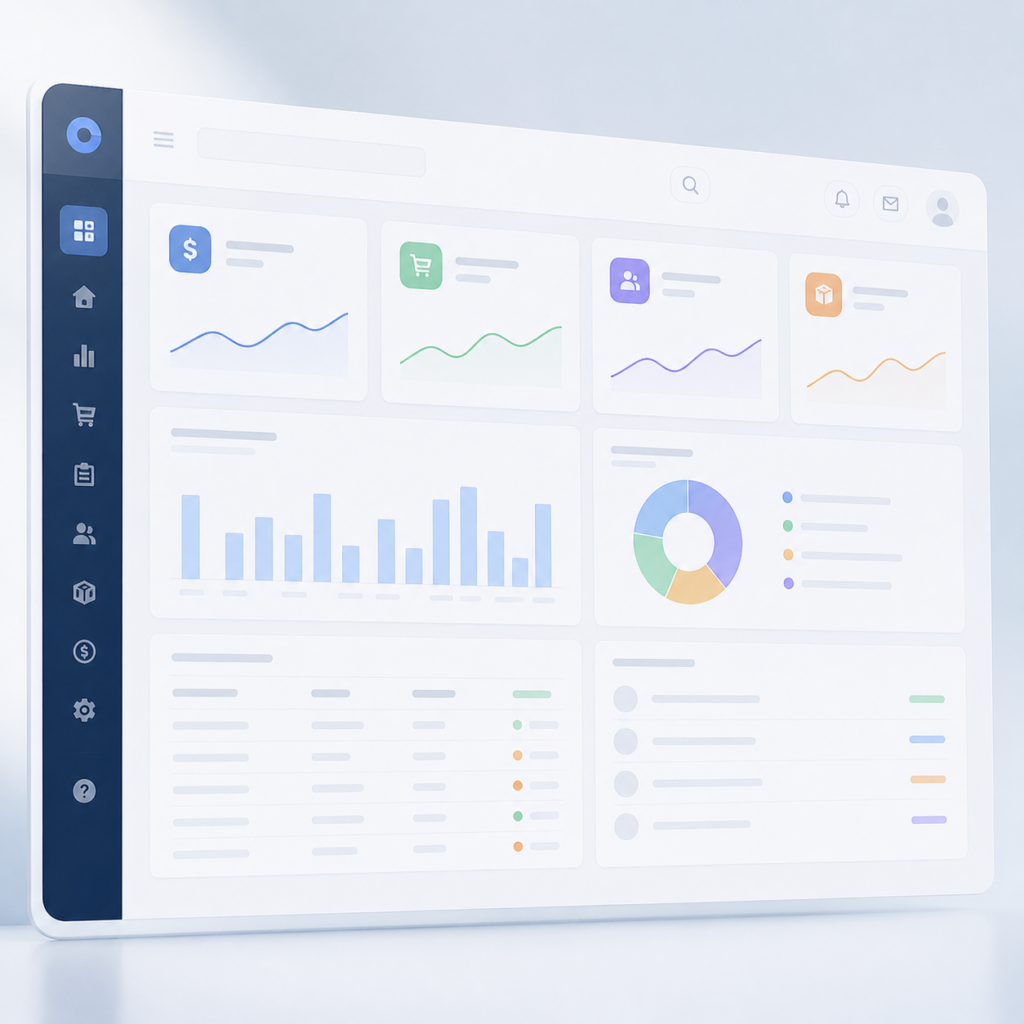
- Customizable dashboards
- Sales, financial, inventory, and other reports.
- Predictive Analytics
- Business Intelligence (BI) Tools
How to Choose the Right ERP for Your Small Business?
Selecting and implementing an ERP system is an important decision that requires careful planning.
Steps for Selection and Implementation
- Assess business needs: Identify current challenges, processes that need improvement, and long-term goals. What problems do you want to solve with an ERP system?
- Set the budget: Consider not only the cost of the license or subscription, but also the costs of implementation, training, customization, and maintenance.
- Research providers and solutions: Look for providers that specialize in small and medium-sized businesses and offer the features you need. Read reviews and request demos.
- Consider scalability: Choose a system that can grow with your business and adapt to future changes.
- Plan the implementation: Set a realistic timeline, assign a project team, and plan for data migration and staff training.
- Prioritize training: Make sure all users are properly trained to use the system effectively.
- Measuring ROI: Once implemented, measure the return on investment by comparing the KPIs (Key Performance Indicators) before and after implementation.
Critical Success Factors
- Management Commitment: Support from senior management is vital to the project’s success.
- Change Management: Prepare your team for the changes that the new system will bring.
- Choosing the Right Provider: Select a reliable technology partner with experience working with small and medium-sized businesses.
- Gradual implementation: Consider implementing modules in phases to facilitate adoption.
Frequently Asked Questions
How much does it cost to implement an ERP system for an SME?
The cost of an ERP system for an SME varies considerably, ranging from a few thousand dollars a year for cloud-based solutions to tens or hundreds of thousands of dollars for more complex on-premises implementations. Factors that influence the price include the number of users, the modules selected, the level of customization, implementation costs, and ongoing support. Cloud-based SaaS (Software as a Service) solutions typically operate on a monthly or annual subscription model, making them more predictable and affordable for SMEs.
How long does it take to implement an ERP system?
The time required to implement an ERP system for an SME can range from a few weeks for basic cloud-based configurations to six months or more for more complex and customized implementations. Factors such as the complexity of business processes, the availability of internal resources, the quality of existing data, and the expertise of the implementation provider all influence the total duration of the project. Detailed planning and effective project management are crucial for keeping the project on schedule.
Can my small business benefit from an ERP system if I only have 10 employees?
Yes, absolutely. Even small and medium-sized businesses with as few as 10 employees can reap significant benefits from an ERP system. Rather than focusing on large-scale process automation, an ERP system for small teams can help centralize information, improve customer management, optimize finances, and ensure that everyone is working with accurate, up-to-date data. Lightweight, cloud-based ERP solutions are specifically designed to meet the needs of smaller businesses.
What happens to my data when I use a cloud-based ERP system?
When you use a cloud-based ERP, your data is stored on the service provider’s secure servers. Cloud-based ERP providers invest heavily in physical and digital security measures to protect their customers’ data. This includes data encryption, firewalls, regular backups, and compliance with privacy regulations. It is essential to research the provider’s security and privacy policies before committing to a solution. Responsibility for security lies with both the provider and the user, who must implement best practices for password and access management.
Is it difficult to train my staff on a new ERP system?
The learning curve for a new ERP system can vary depending on the complexity of the software and the staff’s familiarity with the technology. However, modern ERP systems—especially those designed for small and medium-sized businesses—are built with more intuitive user interfaces. Adequate and ongoing training is essential. Vendors typically provide training materials, tutorials, and support. Involving key staff members from the earliest stages of selection and planning can facilitate adoption and reduce resistance to change.
How can an ERP system improve inventory management for my small business?
An ERP system can transform inventory management by providing real-time visibility into stock levels across multiple locations. It allows you to automate the tracking of incoming and outgoing goods, set automatic reorder points to prevent stockouts or excess inventory, and optimize demand planning based on historical sales data. This reduces inventory-related costs, improves operational efficiency, and ensures that the right products are available to customers at the right time.